Sharks, Culture, and the Future of Our Oceans
Dr. Ron C. Po
09.03.26
Dr Ronald C. Po is founder of BSSI and Associate Professor of International History at the London School of Economics and Political Science.
© The Trustees of the British Museum. Shared under a Creative Commons Attribution-NonCommercial-ShareAlike 4.0 International (CC BY-NC-SA 4.0) licence.
In February, Noah spoke to Andrea Richey, Executive Director of the Hong Kong Shark Foundation.
Dr Ron Po shared his reflections on what the work of campaigners like Richey can tell us about today’s ocean crises and futures.
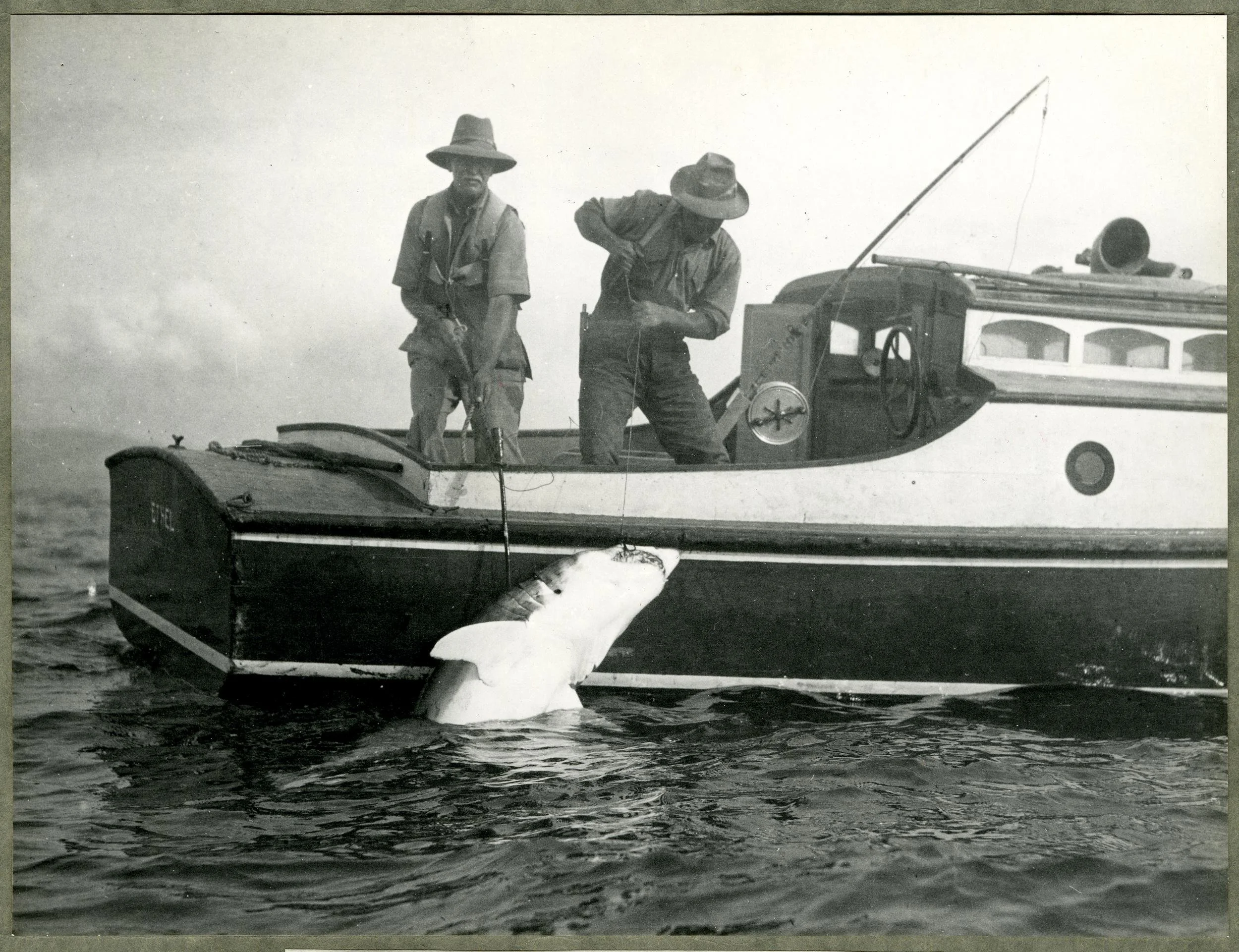
Few creatures fascinate us like sharks. Revered and reviled for hundreds of years as stealthy predators and powerful symbols of the sea, they are increasingly understood as vitally important members of marine ecosystems. At the same time, sharks are among the most vulnerable animals in the ocean today. Pressure on shark populations has skyrocketed worldwide over the past few decades due to growing demand for their fins, meat, oil, and other body parts. To mark the start of BSSI’s first shark-themed series, Mr. Noah Petts, our research associate, talked to Andrea Richey, Executive Director of the Hong Kong Shark Foundation, about why it matters to protect sharks both environmentally and culturally.
Hong Kong Shark Foundation reduces demand for shark products mainly through education and corporate outreach. Richey has been volunteering with, and now directs, the organization's efforts to educate the public about shark conservation. One of their initiatives is persuading companies to implement “shark-free” corporate dining policies. Essentially, employees promise not to order or eat shark fin soup at company dinners. While this might seem minor, it has the potential to create big change. Company dinners are where many luxury food products are most prominently displayed and served, so keeping shark fin off the menu can start dialogues about sustainability and the true price of status foods.
Historically, shark fin soup occupies a complicated place in Chinese culinary culture. Richey states that shark fin soup's presence in Chinese history is sometimes claimed to date back over a thousand years ago when it was first recorded in Chinese imperial courts. From at least the 1980s onwards in Cantonese banquet culture, shark fin soup became viewed as a delicacy used to display affluence. Shark fin soup was served alongside many other pricey seafood dishes like abalone and sea cucumber at wedding banquets or other extravagant celebrations. It became appreciated more for its symbolism of wealth and giving face than for its taste.
Yet cultural traditions are never static. They evolve with changing economic, social, and environmental conditions. The context for shark consumption is now dramatically different. Sharks are recognised as essential to healthy ocean ecosystems and play a key role as top predators. Meanwhile, worldwide fishing effort has expanded. On average, approximately 100 million sharks were killed each year in the early 2000s with more recent estimates suggesting upwards of 200-250 million sharks per year when all drivers of shark exploitation are accounted for. Much of the conversation centres on finning, but as Richey points out, the issue doesn’t end with fins. Demand for shark meat, leather, liver oil (often sold as squalene for cosmetics and supplements), and even pet food is on the rise.
The geography of shark eating also subverts expectations. Shark fin soup tends to dominate news headlines because it has become emblematic of shark eating abroad, and rightly so, but the leading importer of shark meat today is Brazil, where shark fins and meat are sold under other names and incorporated into everyday meals like ceviche. The key takeaway here is that shark fin soup is not the whole story when it comes to the modern shark crisis. Sharks are exploited by a variety of cultures for different reasons and those patterns are shaped by trade routes, changing tastes, and growing seafood markets everywhere.
For that reason education plays a pivotal role in conservation efforts. The Hong Kong Shark Foundation partners with educational institutes throughout Hong Kong, targeting students of all ages from kindergarten classrooms to university lecture theatres. The focus of education is empowering young people to critically analyse how we can achieve sustainability in our oceans. Rather than telling you there is a right thing to do, we present you with the facts and let you weigh the evidence, analyse our impact on the environment and dream up realistic solutions. If each individual makes small changes to their behaviour, like refusing to eat shark products, we can make big changes to our culture.
From the perspective of blue sustainability, the story of sharks tells us something bigger about human connection to the sea. Ocean ecosystems are complex systems where ecology, culture and economy are dynamically intertwined. Sharks are charismatic creatures, but also barometers of ocean health. When sharks decline, it is a symptom of larger structural pressures on the ocean.
At the same time, the story of shark fin soup teaches us that culture is not static. If previous generations could reinvent cultural practices when they realised they no longer represented their beliefs or knowledge, so can we. "Questioning unsustainable traditions does not mean assaulting culture as a whole," says Richey. "It's part of how cultures constantly reassess their priorities and relationship with nature."
For initiatives like BSSI, the conversation about sharks therefore extends beyond a single dish or conservation campaign. It allows us to see how historical knowledge, cultural understanding, and environmental science can intersect to help create better futures for our oceans.
Protecting sharks ultimately requires global collaboration—between scientists, historians, educators, policymakers, and communities around the world. As ocean health continues to decline under stress from overexploitation, climate change, and pollution, these dialogues are only going to become more urgent.
Sharks have existed in our oceans for over 400 million years. If sharks were to disappear from the oceans, the balance of our marine ecosystem would start to degrade, causing ripple effects of collapse throughout our blue environment. Ensuring they stay in our oceans for future generations to admire is not only an environmental responsibility, but a cultural duty as well.